
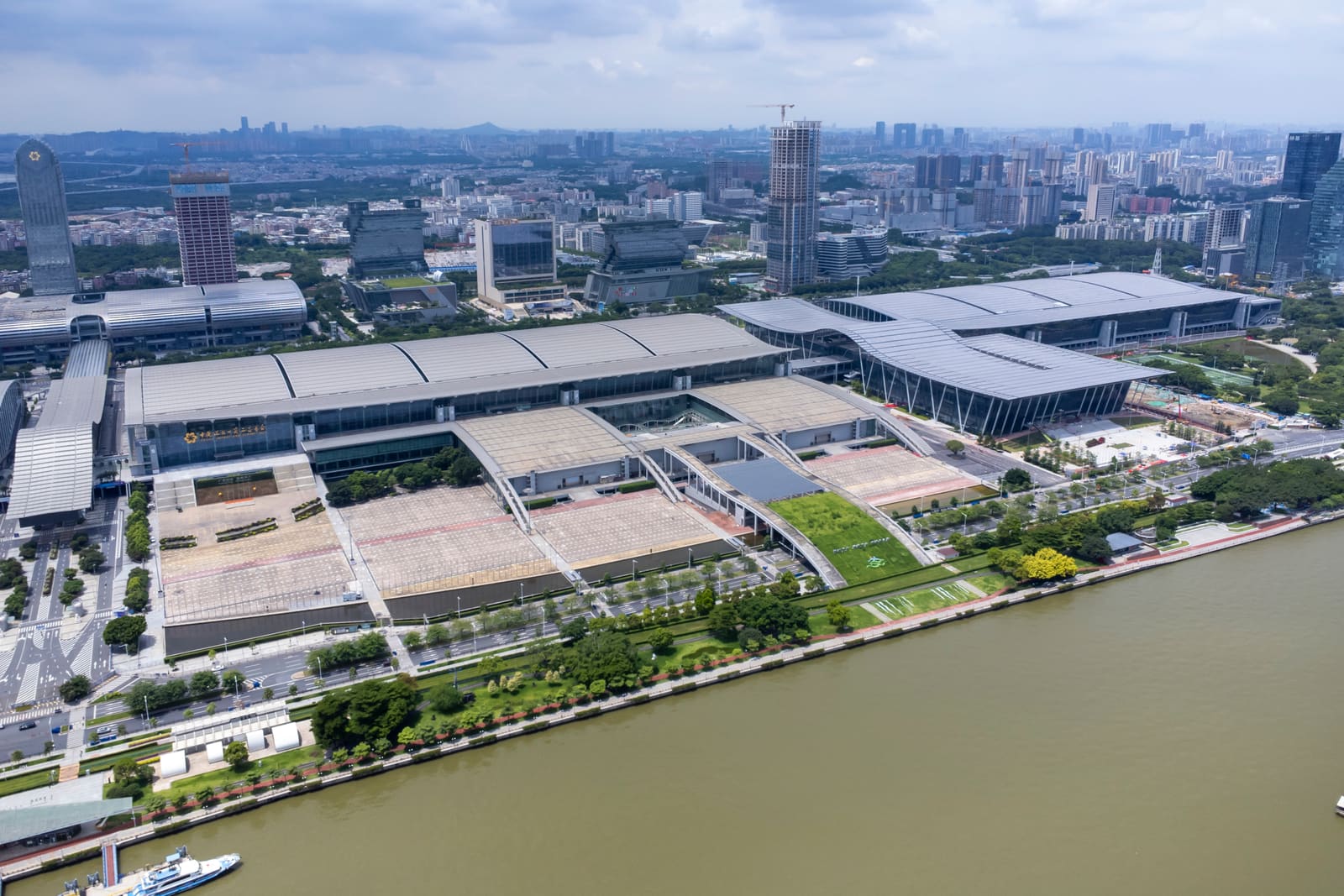
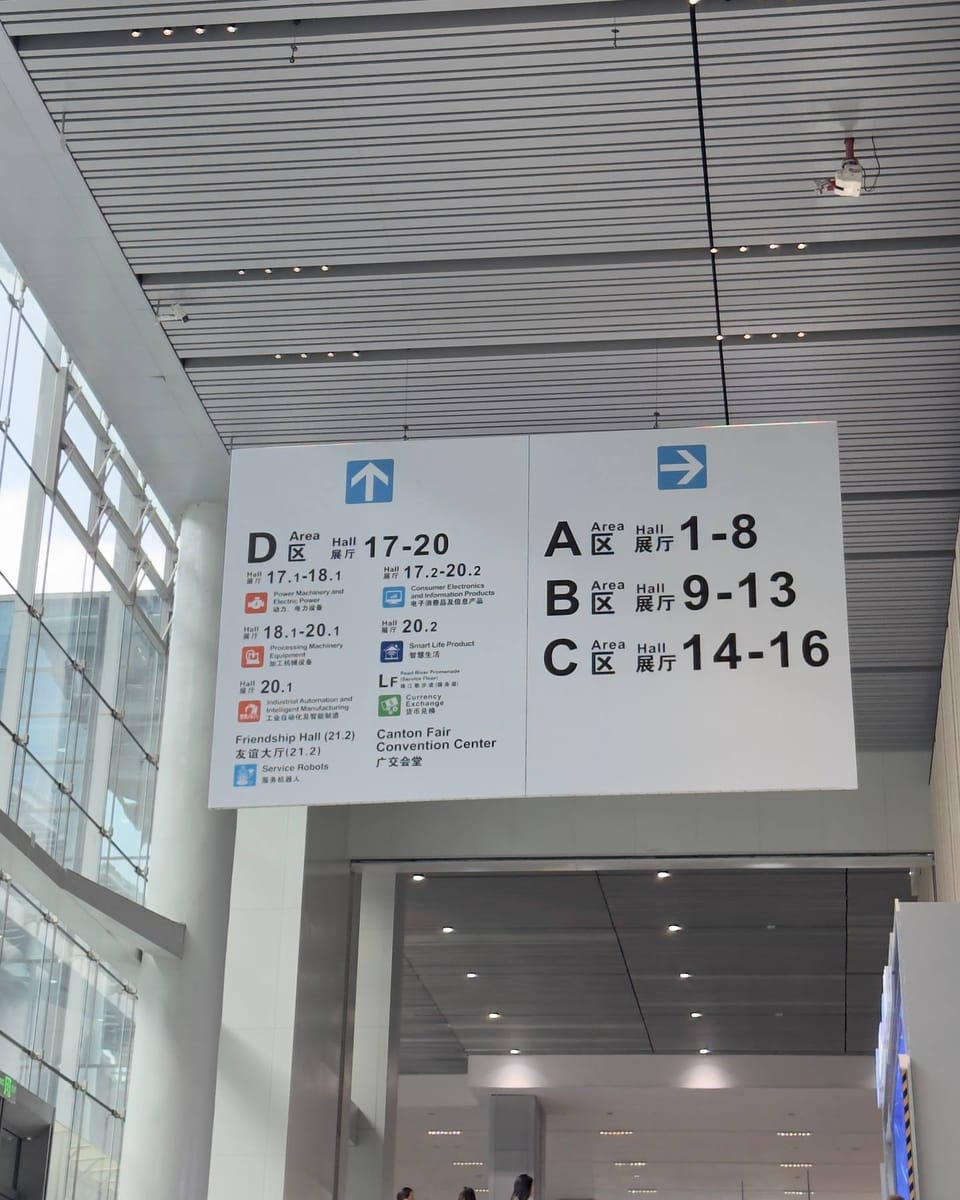
On 18 October we spent the day at the 140th China Import and Export Fair in Guangzhou: 37 booths with robots, computers for local AI, kiosks and energy. We asked every booth the same questions — price for export, private label, certificates, warranty and service outside China. Here is what we learned and what it means if you buy from China.

Robots: factories want dealers, but check the service
Delivery and reception robots are the most mature category. Most of them speak 30 or more languages, including Spanish and Arabic, and several connect to large language models such as DeepSeek or ChatGPT. Factories sell from one unit and are actively looking for dealers abroad.
Humanoid and quadruped robots for universities come with open SDKs. Some makers have no dealers outside China yet, which opens the door for distributors. But warranty and repairs abroad are often not in place, so before recommending a model we check spare parts and who will service it in the buyer's country.
Robot joints and harmonic reducers for labs and start-ups are sold from one to ten units; CE certificates usually cover the joints.
Local AI: memory decides the price
The strongest trend in computers: mini PCs with 128 or 192 GB of unified memory (AMD Ryzen AI Max class) that run large language models in the office, without the cloud. Factories preinstall the customer's system image. Prices for 10 and 100 units are almost the same today and follow the price of memory.
For AI and computer-vision courses there are single-board computers with an NPU of 1.2 to 6 TOPS. Which neural networks actually run on each NPU has to be verified board by board — we ask the factory to confirm it in writing.
Industrial PCs with Intel Core Ultra processors add an NPU for AI at the edge. Before designing a board into your product, ask how many years it will stay in production.
Kiosks, POS terminals and panels: an open SDK is the norm
Self-service kiosks and POS terminals run Android or Windows and come with open SDKs and APIs, so integrators connect their own ordering and payment software. Payment terminals and fiscal rules differ from country to country, so the real work is the integration, not the hardware.
Interactive panels of 65 to 86 inches for schools are made under the buyer's brand from about 100 units. Google certification (EDLA) comes only with newer Android versions — important if a school needs Google services on the panel.
Private label starts from 5 units at some kiosk makers and from 100 to 1,000 units for panels and computers.
Energy: prices may change from January 2027
Several factories offer commercial storage cabinets of 100–261 kWh, including all-in-one units with solar and diesel inputs that work on and off the grid — a fit for farms, wineries and cold storage.
For server rooms, 48 V rack batteries are chosen by discharge rate. Backup for servers needs a high surge current, so ask for 1C continuous and 2C peak rather than standard storage modules.
Two battery makers told us their prices hold until the end of 2026 and may change from 1 January 2027. If you plan a purchase for early 2027, fix the price in a written quotation now.
How we use this
A conversation at a booth is only the start. A price said out loud at a fair is not a quotation: we request every price in writing, compare factories and check the certificates required in the buyer's country.
Tell us what you need — we will reply with a shortlist of suitable models and prices.